
Fleet bays, shops, warehouses and farm buildings
Commercial & Shop Floor Epoxy in Topeka, KS
Resin systems sized to the loads, fluids and cleaning your floor sees each day.
- Free on-site estimates with a slab moisture check
- Itemized written quote before any work starts
- Full diamond grinding and crack repair under every coating
Start With What Happens on the Floor
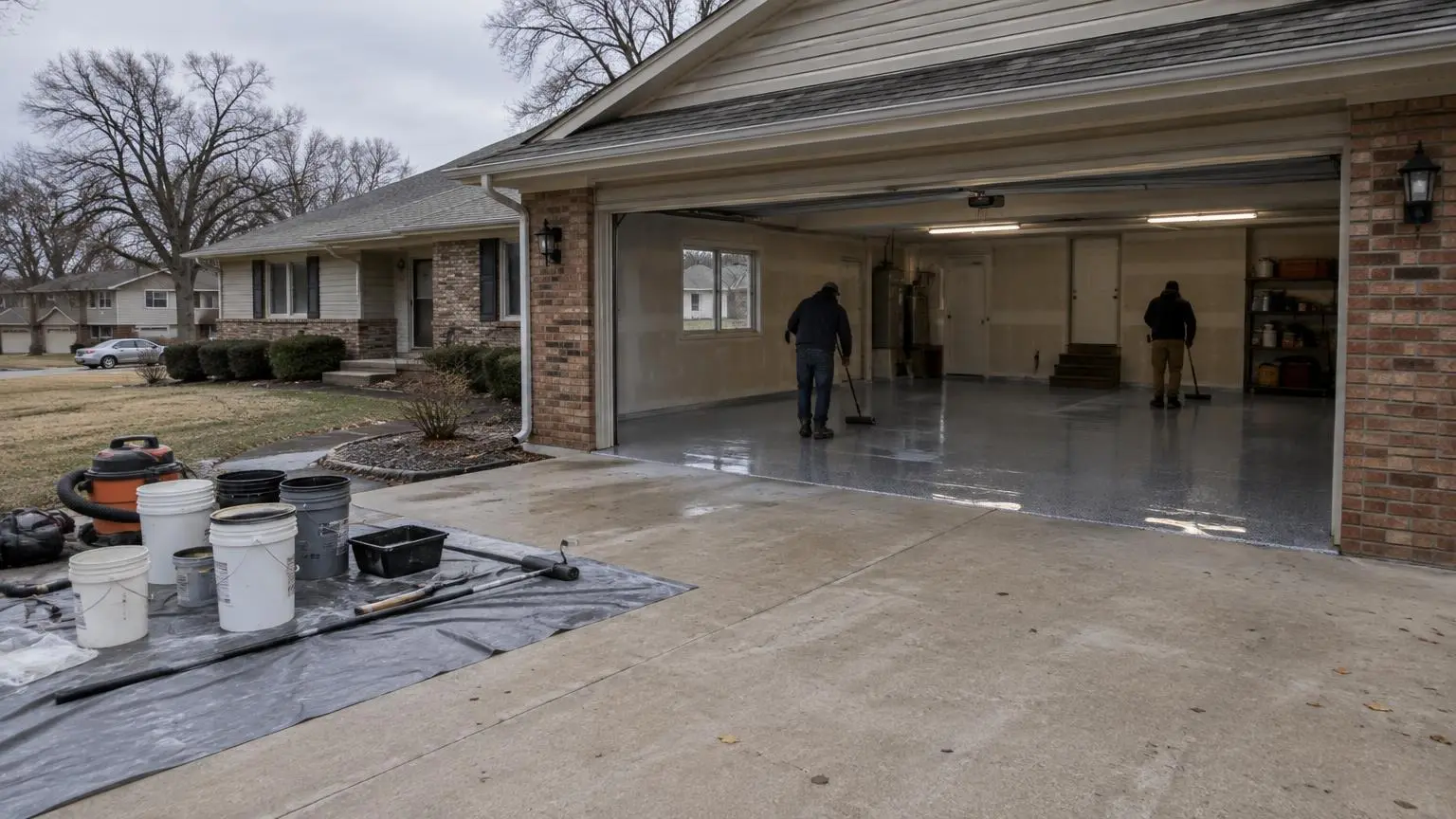
Commercial & shop floor epoxy is a different job from a house garage. A work floor in Topeka might carry a loaded pallet jack forty times a shift, catch coolant from a lathe, or take a pressure washer every Friday. The city has a lot of floors like that. Its 2023 financial report, as listed on Wikipedia, names Hill's Pet Nutrition and BNSF among the largest employers and Goodyear among the main manufacturers. Around them are fleet garages, machine shops, supply warehouses and the pole barns that dot Shawnee County and the towns past it.
What we ask on the walk-through
Before we name a product, we want answers to a few plain questions.
- What is the heaviest thing that rolls across this slab, and on what kind of wheel?
- Which fluids land on it: motor oil, hydraulic fluid, brake fluid, coolant, solvents, sanitizers?
- How is it cleaned now, and how hot is the water?
- Is the building heated in January?
- Which areas can close, for how long, and on which days?
The answers set the thickness, the topcoat and the schedule. Two shops of the same size can end up with very different systems.
Brine rides in on every truck
The City of Topeka sprays salt brine on main roads and bridges before storms, and WIBW reported that crews switch to a salt and beet juice mix once snow falls. Every service truck, plow and pickup that pulls into a bay carries some of that inside. On bare concrete the salty meltwater soaks in and the beet juice leaves a tacky film that grabs sand. On a sealed resin floor it sits on top and goes down the drain with a squeegee. For bays that see this all winter, we pick a topcoat rated for chlorides and automotive fluids.
Cold buildings and curing
Topeka's freezing window runs from about mid-October to mid-April. Many farm shops, storage buildings and detached bays are heated only when someone is working, or not at all. Resin needs a minimum slab temperature to cure, and that number is printed on each product sheet. We measure the slab, not the air, before we schedule. Late-season jobs may need temporary heat or a faster-curing polyaspartic topcoat, and both are written into the quote.
Concrete with a long work history
A slab that has held a business for decades usually carries oil soaked deep into it, curing compound from the original pour, old paint lines and patches from past repairs. We grind with larger machines, degrease saturated spots, and cut out or fill failed joints. Floors poured on grade get a moisture check too. Northeast Kansas sits largely on clay till, which holds water after a wet spring, and vapor under a big slab lifts a coating the same way it does in a house.
Keeping the doors open
Downtime often costs more than the floor. We can split the building into zones and coat one while you work in the others. Evening and weekend shifts are possible on many jobs. Your written quote names every zone, how long it is out of service and when forklifts can come back.
Lines, lanes and grip
We paint aisles, pedestrian walkways, forklift lanes and keep-clear boxes in colors that stand out against the floor. Aggregate goes into the topcoat where floors get wet: near overhead doors, around wash bays, by drains. Dry storage areas can stay smoother so they sweep clean.
Wash-down and food rooms
Breweries, commercial kitchens and pet food prep areas see hot water and sanitizer every day. Those rooms usually need a system rated for that exposure and a coved base that carries the coating a few inches up the wall. Building and health inspectors have their own requirements, so we check them before we choose a product.
Planning the second topcoat
The busiest lanes wear first. A fresh topcoat on those paths, done before traffic reaches the base layer, keeps the rest of the floor in service. We mark where we expect that wear and tell you what to look for.
What This Covers
We scope a work floor zone by zone, by what each zone does.
Load-rated resin builds
Thicker 100% solids layers where pallet jacks, carts and dropped parts hit hardest.
Fluid-resistant wear layer
A topcoat picked for the oils, brine, solvents and cleaners in your building.
Lanes and safety markings
Aisles, walkways and equipment boxes painted in high-contrast colors.
Zoned and after-hours scheduling
Work split by area, evenings or weekends so the business keeps running.
Coved bases for wash-down rooms
Coating carried up the wall where hot water and sanitizer are used daily.
Commercial & Shop Floor Price Ranges
| What is being priced | Published figure |
|---|---|
| General installed epoxy, per sq ft | $4 to $10 |
| 100% solids commercial or industrial systems, per sq ft | $12 and up |
| Extra for high-traffic coatings | 20% to 30% more |
| Contractor labor rate | $50 to $150 an hour |
| Typical minimum job charge | $500 to $1,000 |
| Patching a crack or chip | $25 to $250 |
These are national figures from HomeGuide (general epoxy) and HomeAdvisor (commercial systems, labor, minimums and patching). Floor size, slab damage, chemical exposure and after-hours work move a commercial total a lot. The written estimate we give you after the walk-through is the price.
How It Works
1. Site walk
We look at the slab and ask about loads, fluids, cleaning, heat and hours.
2. Zone-by-zone scope
A written quote listing the system, each zone, its downtime and the total.
3. Surface work
Grinding, degreasing, joint and crack repair, and moisture checks.
4. Coat and hand back
Resin, markings and grip added as written, then each zone returns to use.
Commercial & Shop Floor Epoxy Questions
What does a coated shop floor run per square foot?
HomeAdvisor puts commercial and industrial 100% solids systems at $12 or more per square foot and says high-traffic coatings add 20% to 30%. A lighter-duty shop can come in lower. We price your floor after we walk it.
Do we have to close while you work?
Usually not the whole building. We coat one zone at a time and can work nights or weekends. The quote lists how long each zone is closed.
Can you coat a pole barn that is not heated?
Yes, if the floor is concrete and the slab is warm enough for the product. In cold months we may bring in temporary heat or use a faster-curing topcoat. We check slab temperature and moisture first.
How often will the floor need a new topcoat?
It depends on traffic. Forklift lanes and doorways wear first. Recoating those paths before the base shows through is far cheaper than redoing the floor.
Commercial & Shop Floor Epoxy Service Areas
- Epoxy Flooring in Topeka, KS
- Epoxy Flooring in Tecumseh, KS
- Epoxy Flooring in Berryton, KS
- Epoxy Flooring in Silver Lake, KS
- Epoxy Flooring in Meriden, KS
- Epoxy Flooring in Auburn, KS
- Epoxy Flooring in Hoyt, KS
- Epoxy Flooring in Rossville, KS
- Epoxy Flooring in Perry, KS
- Epoxy Flooring in Carbondale, KS
- Epoxy Flooring in Ozawkie, KS
- Epoxy Flooring in Maple Hill, KS
- Epoxy Flooring in Mayetta, KS
- Epoxy Flooring in Overbrook, KS
- Epoxy Flooring in St. Marys, KS
- Epoxy Flooring in Burlingame, KS
- Epoxy Flooring in Oskaloosa, KS
- Epoxy Flooring in Valley Falls, KS
- Epoxy Flooring in Holton, KS
- Epoxy Flooring in Osage City, KS
Get a Commercial & Shop Floor Epoxy Estimate
Free walk-throughs for shop, fleet, warehouse and farm floors around Topeka.